Pre-Order — 20% Off

Introducing The Pivot

Life-Saving. Brain-Boosting. Body-Building.

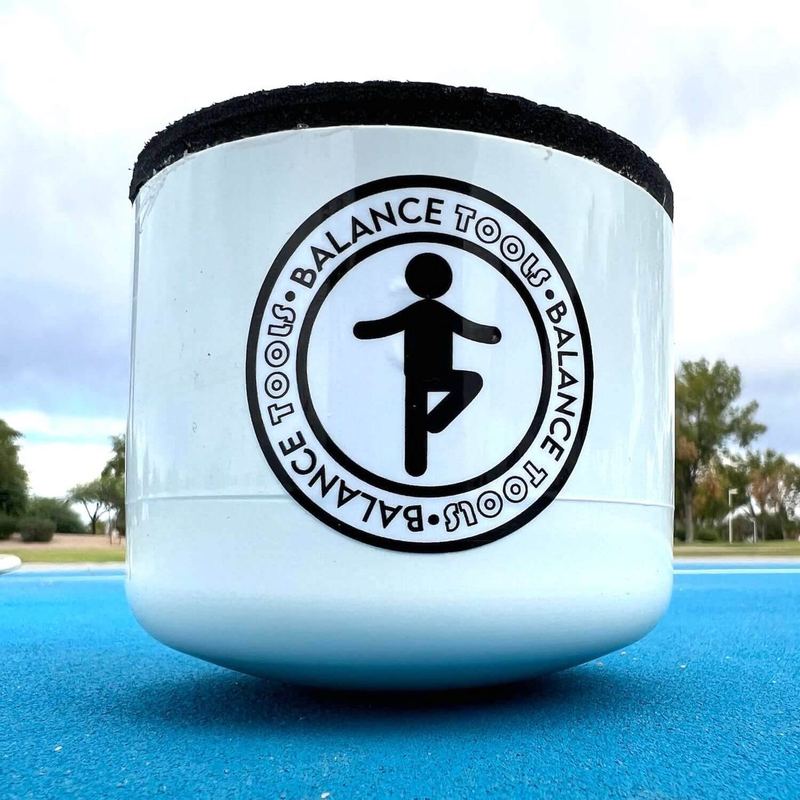
The world's first one-footed balance cap. A neural amplifier for coordination, balance, and play. We're crowd-funding our next production batch.

The Pivot balance cap on mat

"This is just so much fun. I can't believe how different my balance is on each leg."

This is the original product video from our first production batch

Next Production Run

We need 100 pre-orders to start building

0 of 100 claimedGoal: 100

Did you know? People who can't stand on one leg for 10 seconds have an 84% higher risk of death within the next decade.

You don't need The Pivot to start training. The world is your balance board.

Take the free One-Minute Balance Test at CoordinationGames.com →

"I always thought my right foot was my strong one. I didn't realize how much I was dependent on my left for stability."

Why The Pivot

3.5 inches. 300 lb capacity. Fits in your pocket.

The Pivot creates 3D rotational instability under one foot while keeping the other foot free. That's the breakthrough. You can train deeply without fear of falling. Your free foot is always there.

Safer

One foot always free. No locked-in fall zone.

More Effective

3D rotation challenges the brain like nothing else.

Portable

Fits in a bag. Play anywhere, even in line.

Versatile

Balance trainer, foot massager, and stretch tool in one.

All Ages

Kids to elderly. Rehab to elite athletics.

Affordable

A fraction of the cost of traditional balance tools.

"I can't believe how good that feels on my plantar fasciitis."

Dahveed Nelson on The Pivot

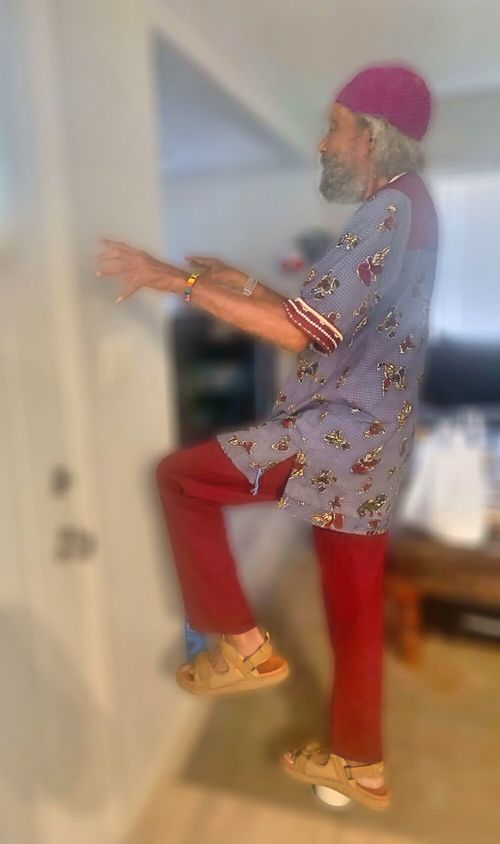
"I'm 83, and not only am I having a lot of fun with this little thing, I'm getting better at it all the time. I can feel how it's improving my posture and movement."

Dahveed Nelson — Spoken Word Poetry Legend

"I didn't realize how sore my feet were until I tried this."

Not Just a Balance Tool

Three tools in one. At least.

Its curved shape and solid construction make it a massager, a stretching tool, and a therapy device that works whether you're on your feet or sitting down. People have even started using it as a back massager behind their chair.

🦶

Rolling Massage

Turn it on its side and roll it under your foot. Targets plantar fasciitis and releases deep tension.

🔄

Rock Mode

Flip it upside down. The curve is perfect for foot fascia work, arch strength, and deep tissue release.

🧘

Stretch Tool

Toes on top, heel to the ground. A deep calf and Achilles stretch. Seated use for rolling out knots.

The Pivot close-up

"It was really interesting to feel the difference between using the front, middle, and heel of my foot. It really is wildly different."

What's Included
🔵

One Pivot Balance Cap

Heavy-duty cushioned top. Shoes or barefoot. Holds 300 lbs.

🟢

Non-Slip Floor Mat

Lightweight, durable mat for hard floors.

👜

Canvas Tote Bag

Take your Pivot everywhere.

🎮

Balance Cap Training

7 days of Pivot-specific training + community access.

$49.95

$39.95
PRE-ORDER BONUS: 20% OFF

Includes Pivot + Mat + Tote + Training. Free shipping (Continental US).

Pre-Order Now

Secure checkout via PayPal. Credit cards accepted.

Over 50 units sold in our first batch. Ships when we hit 100 orders. Full refund if we don't.

Ordering 50+?

Bulk orders of 50 or more receive a free custom sticker with your logo, art, or design on every unit. Contact iam@ryantoday.com for wholesale details.

"I'm shocked at how different each leg is. I had no idea my balance was this uneven. Now I know exactly what to work on."

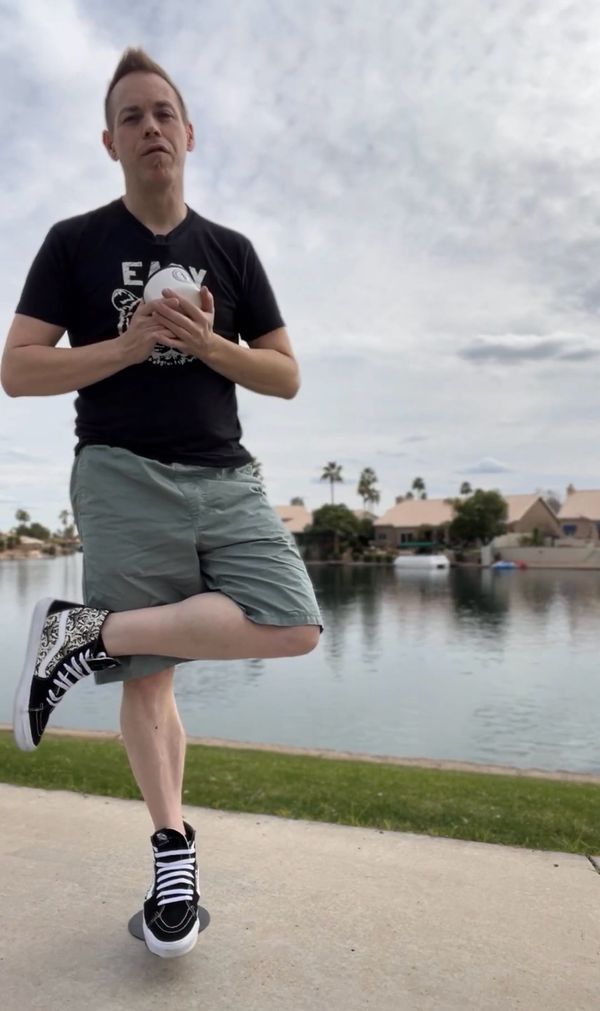
Ryan Today balancing on The Pivot

Hi. I'm Ryan Today.

I've spent over 25 years as a neuroplasticity coach, researcher, and educator. I've worked with people in addiction, mania, grief, chronic pain, and high-performance athletics. The thread that connects all of it is coordination: how well the body's systems talk to each other, and what happens when they stop.

My deepest work is with the tongue, the most overlooked organ in human development. The tongue sits at the nexus of balance, posture, breath, speech, emotion, and coordination. It's the nodal plexus operator, the single structure wired to more neural pathways than almost anything else in the body. I built The Pivot specifically to make that connection visible. You get on it. You play. And then you notice your tongue is doing something it's never done before. That's the moment everything changes.

I've sold over 50 units in our first batch. Kids with autism have stabilized on it. An 83-year-old poet plays on it every day. Pro athletes are requesting them. This is version two. I'm ready to build the next batch.

"I like to put it behind my chair and use it as a back massager. I had no idea it could do that."

Go Deeper

The science behind the play.

What's actually happening in the brain on The Pivot?

Your cerebellum, motor cortex, prefrontal cortex, and vestibular nuclei are all firing simultaneously and negotiating in real time. On flat ground, these systems coast. On The Pivot, they can't. The 3D rotational instability demands constant recalibration: your foot sends proprioceptive data up through the ankle, knee, and hip. Your inner ear detects tilt. Your eyes track the horizon. Your core fires to stabilize. And your brain has to integrate all of it into a single coherent motor response, hundreds of times per second.

This is neuroplasticity under load. Every correction builds a new synaptic connection. Every wobble you recover from strengthens the pathway. The result isn't just better balance. It's a faster, more integrated nervous system. Reaction time improves. Spatial awareness sharpens. Cognitive load capacity increases. You're not training a skill. You're upgrading the hardware.

Why is one-footed training fundamentally different?

Two-footed balance boards create what we call the "locked-in fall zone." Both feet are committed to an unstable surface. When you lose balance, there's no escape route. Your brain knows this, and it responds with a low-grade fear response that actually limits how deeply you're willing to engage. You hold back. The training stays shallow.

The Pivot inverts this entirely. One foot is on the cap. The other is free, always ready to step down. The brain registers this as safe. And because the fear is gone, something paradoxical happens: you engage more deeply. Your cerebellum commits more fully. Your proprioceptors reach further. Your vestibular system opens up. You get dramatically more neural activation per second of training, with dramatically less injury risk. It's not a small improvement. It's a different category of training.

How does The Pivot connect to the tongue?

The tongue is innervated by five cranial nerves: the hypoglossal (motor control), the trigeminal (sensation), the facial nerve (taste, expression), the glossopharyngeal (swallowing, pharyngeal reflexes), and the vagus (parasympathetic regulation, gut-brain axis). These same nerve bundles control your vestibular processing, your breath, your core stabilization, and your autonomic state. The tongue isn't just in your mouth. It's a central switching station for the entire coordination system.

When you stand on The Pivot, your tongue activates whether you notice or not. It presses against the palate to stabilize the cranial base. It shifts laterally in sync with postural corrections. It adjusts tension to modulate breath and core engagement. This is the tongue-core-vestibular axis, and The Pivot is the simplest way to expose it. The moment someone notices their tongue moving during balance training, they've discovered a connection that will change how they understand their entire body. That's why The Pivot exists. It's a tongue training tool disguised as a balance toy. Go deeper at TheTongue.com →

Monkey Toes, Lizard Brain, and the Grounded Arch: three positions, three brain regions

Front of foot (Monkey Toes): When you place the Pivot under your toes, your toes clasp the edge. Your hands instinctively want to reach forward. Your anterior chain lights up. This is the primate grasping reflex: millions of years of arboreal wiring activating through your feet. It trains grip strength, toe dexterity, and forward-recovery coordination.

Heel (Lizard Brain): Shift the Pivot under your heel and something completely different fires. You feel the backward tilt. Your breath catches. Your posterior chain stiffens. This is the reptilian startle response, the same gasping mechanism triggered by cold-water immersion, but activated through balance instead of temperature. It trains backward-fall recovery and teaches your nervous system to move through fear instead of freezing in it.

Midfoot (Grounded Arch): The middle position activates your arch and the deep stabilizers of the foot and ankle. This is the grounded position, calmer, more meditative, more centered. Different neural pathways entirely: less fight-or-flight, more proprioceptive integration and postural calibration. Three positions on the same tool, three completely different brain activation patterns.

This is why The Pivot is not just a balance tool. It's a neural mapping device. Each position tells you something different about how your brain coordinates your body. And the more you explore all three, the more integrated your entire coordination system becomes.

Why does balance predict mortality?

A 2022 study in the British Journal of Sports Medicine followed over 1,700 adults for 12 years. Those who couldn't hold a 10-second one-legged stance had an 84% higher risk of all-cause death, even after adjusting for age, sex, BMI, and comorbidities.

Balance isn't just about not falling. It's a systems-level biomarker. When balance degrades, it reflects simultaneous decline in cerebellar function, vestibular acuity, peripheral nerve conduction, cardiovascular efficiency, musculoskeletal integrity, and cognitive processing speed. It's the canary in the coal mine for your entire nervous system. Conversely, training balance sends a coherence signal back through all those systems at once. It's one of the highest-leverage interventions in human health, and it costs nothing but the willingness to stand on one leg. Start training for free at CoordinationGames.com.

Why play and not structured exercise?

Structured exercise activates motor pathways through repetition. Play activates them through novelty. Neuroplasticity research consistently shows that novel, unpredictable challenges produce stronger and more lasting synaptic changes than repetitive ones. When you play on The Pivot, every session is different because your body is different every day. Your fatigue level, your emotional state, your hydration, your attention, all of these change the balance challenge in real time.

Play also activates reward circuitry. Dopamine and endorphins flow when you accomplish a feat, nail a spin, or hold a pose you couldn't hold yesterday. This creates a positive feedback loop that structured exercise almost never achieves. People don't stop playing because it's boring. They stop exercising because it is. The Pivot is designed to be a game first and a training tool second because the neuroscience says that's what actually works.

Your feet are sensory organs. What does that mean for training?

The sole of your foot contains over 200,000 nerve endings, making it one of the most sensory-dense surfaces on your body. These mechanoreceptors detect pressure, vibration, texture, shear force, and temperature. They feed directly into your proprioceptive system, which is your brain's real-time map of where your body is in space.

Most people walk on flat, cushioned surfaces in padded shoes all day. The sensory diet of their feet is impoverished. The receptors are understimulated. The neural map gets fuzzy. Balance degrades not because muscles are weak but because the sensory input is malnourished.

The Pivot's curved, unstable surface creates a rich sensory environment for the foot. Every micro-adjustment fires thousands of receptors. The neural map sharpens. Proprioceptive acuity increases. And because the foot is connected through fascial chains all the way up through the pelvis, spine, and cranial base, the benefits cascade upward. Better foot sensation leads to better posture, better gait, better core stability, and better balance, all from a 3.5-inch tool under one foot.

FAQ

Questions

When does it ship?

When we hit 100 pre-orders, we start production. Estimated 3-4 weeks from reaching the goal. You'll get email updates on progress.

What if you don't hit 100 orders?

Full refund. No questions asked. If we don't reach the goal within 90 days, every order is refunded automatically.

What ages or skill levels can use it?

Any age. Any skill level. We've worked with children, elderly adults, people with disabilities, and elite athletes. The Pivot adapts to you.

Can I gift it?

Yes. During checkout you can mark it as a gift. We'll handle the rest.

Do I actually need this?

No. The world is your balance board. We teach a complete free balance training program called Games of Coordination! that works on flat ground with zero equipment. The Pivot amplifies that practice. It creates conditions the floor can't. But if you're doing great on the ground, keep playing there. We mean it.

Can I order in bulk?

Yes! Orders of 50+ get a free custom sticker with your own logo or design on every unit. Contact iam@ryantoday.com for wholesale rates, co-branding, and group challenge support.

Not ready to buy? No problem.

Learn to Play Free at CoordinationGames.com

The Pivot is part of the world of Ryan Today and TheTongue.com